


Nutrient mixing and aeration are two of the biggest reasons a feed tank either behaves or turns into a sludge-filled headache. When nutrients stay suspended, oxygen stays available, and the tank keeps moving, feeding gets more consistent from the first plant to the last.
Key Takeaways
- Mixing keeps nutrients suspended so the solution stays more consistent across the tank.
- Aeration helps increase oxygen in the water and reduces stagnant conditions.
- Mixing and aeration are related, but they are not the same job.
- Sediment, smells, pH swings, and uneven feeding often trace back to poor tank movement, old solution, bad sequencing, or dirty equipment.
- A good feed-tank routine starts with water quality, proper mixing order, enough movement, regular testing, and routine cleaning.
A feed tank is not just a container. It is where water, nutrients, additives, oxygen, temperature, pH, sediment, and time all meet in one place.
When the tank is working well, the routine feels easy. Nutrients mix evenly. The bottom of the tank stays cleaner. The pump does not fight sludge. Plants get a more consistent feed.
When the tank is not working well, problems show up fast. Sediment piles up. The water smells off. pH starts drifting. EC readings do not feel stable. The first plant and the last plant may not get the same solution.
This guide explains the practical side of nutrient mixing and aeration: what each one does, why both matter, and how to build a feed-tank routine that does not make you babysit the mix all day.
What Nutrient Mixing Actually Means
Nutrient mixing means distributing fertilizers, amendments, and additives evenly throughout the tank.
That sounds simple, but not every input behaves the same. Some nutrients dissolve quickly. Some take more time. Some leave sediment. Some organic inputs can be thicker, heavier, or more likely to settle.
Good mixing helps prevent the tank from turning into layers:
- Light water near the top
- Stronger solution near the bottom
- Undissolved material collecting in corners
- Sediment getting pulled into pumps or lines
- Different plants receiving different concentrations
The goal is not chaos in the tank. It is controlled movement that keeps the solution even enough to feed with confidence.
Simple rule: if nutrients can settle, they need movement.
What Aeration Actually Means
Aeration means adding or increasing air contact in the water so oxygen can dissolve into the solution.
Roots need oxygen to function properly. In water-based hydroponic systems, dissolved oxygen becomes even more important because roots are directly connected to the nutrient solution. In feed tanks and reservoirs, aeration also helps reduce stagnant conditions that can contribute to smells and inconsistent water quality.
Aeration can come from air stones, air pumps, water movement, splashing, circulation, or air-injection style systems. The point is not just making bubbles because bubbles look active. The point is supporting better oxygen availability and keeping the tank from sitting stale.
Mixing vs. Aeration: Same Tank, Different Jobs
Mixing and aeration often happen together, but they are not the same thing.
Mixing
Moves the liquid and keeps nutrients, solids, and additives distributed throughout the tank.
Aeration
Adds air contact and supports oxygen levels so the solution does not sit flat and stale.
Circulation
Moves water around the tank, but may not fully mix heavy inputs or add much oxygen by itself.
This matters because a tank can look active without being well mixed. A small pump may move the surface while sediment still collects at the bottom. An air stone may create bubbles while heavier nutrients sit in dead zones. A transfer pump may move liquid fast when feeding, but not keep the tank mixed while it sits.
Better tank routines usually need both: enough movement to suspend nutrients and enough air contact to reduce stagnant conditions.
Why Feed Tanks Develop Sediment
Sediment happens when material falls out of suspension and collects at the bottom of the tank.
Some sediment is caused by the inputs themselves. Some is caused by poor mixing. Some comes from adding ingredients too quickly or in the wrong order. Some comes from old residue that never got cleaned out.
Common sediment triggers include:
- Dry nutrients added too quickly
- Thick organic inputs
- Poor mixing at the bottom of the tank
- Hard water or high alkalinity water
- Incompatible additives
- Old residue from previous batches
- Letting the tank sit too long without movement
Sediment is more than wasted product. It can clog pumps, restrict hoses, throw off consistency, and make your next batch dirtier before it even starts.
Why Aeration Can Affect pH
pH can shift after mixing and aeration because the tank is a live environment. Water source, alkalinity, nutrients, temperature, biological activity, and air exchange can all influence readings.
Aeration can also change the balance of dissolved gases in the water. That is one reason some tanks show pH movement after aeration begins, especially when the water source has high alkalinity or the solution has not had time to stabilize.
This does not mean aeration is bad. It means you should avoid chasing every tiny movement right after mixing. Test consistently, let the solution settle into its pattern, and make adjustments based on trends instead of panic.
Tank tip: test pH after the solution has mixed long enough to become consistent, not while dry nutrients are still dissolving.
The Basic Feed-Tank Workflow
A better feed-tank routine starts before the first nutrient hits the water.
1. Start with your water source
Tap water, well water, RO water, and stored water all behave differently. Before you blame the nutrient line, understand the water going into the tank.
2. Fill the tank before adding inputs
Give yourself enough water volume for the ingredients to disperse. Adding concentrated nutrients into too little water can create hot spots and uneven mixing.
3. Add nutrients in the right order
Follow the nutrient manufacturer’s directions. Some products should not be mixed together in concentrated form before they hit the tank.
4. Mix thoroughly
Keep the solution moving long enough for ingredients to distribute throughout the tank. Watch the bottom, not just the surface.
5. Test after mixing
Measure pH and EC after the solution has had time to blend. Testing too early can send you chasing numbers that were not stable yet.
6. Feed before the tank gets stale
Mixed nutrient solution should not sit forever. The longer it sits, the more temperature, biology, oxygen, and residue can change the tank.
7. Clean between batches
Old residue becomes the starting point for the next problem. Drain, rinse, scrub, flush, and reset before buildup gets comfortable.
How Long Should You Mix Nutrients?
The right mixing time depends on tank size, water temperature, nutrient type, pump strength, and how easily the inputs dissolve.
Plain liquid nutrients may blend quickly. Dry powders, thick organic inputs, and larger tanks usually need more time and stronger movement.
Instead of relying only on a clock, look for signs that the tank is actually mixed:
- No visible clumps
- No heavy sediment collecting immediately after mixing
- Consistent color or clarity across the tank
- Stable pH and EC readings after the solution has circulated
- No obvious dead zones in corners or along the bottom
If you are always finding product at the bottom, the tank needs better mixing, a different process, cleaner equipment, or a closer look at ingredient compatibility.
Common Tank Problems and What They Usually Mean
| Problem | What It May Mean | What to Check First |
|---|---|---|
| Sediment at the bottom | Nutrients are not staying suspended, ingredients are incompatible, or the tank has dead zones. | Mixing strength, mixing time, nutrient order, old residue, and bottom movement. |
| Tank smells stale | Water is sitting too long, aeration is low, or buildup is forming on wet surfaces. | Hold time, tank cleaning, oxygenation, water temperature, and old organic inputs. |
| pH keeps moving | The tank is still stabilizing, water alkalinity is high, or inputs are reacting over time. | Water source, testing timing, meter calibration, aeration pattern, and nutrient order. |
| EC readings feel inconsistent | The solution may not be fully mixed, or heavier material is collecting in parts of the tank. | Sample location, tank movement, sediment, and whether the solution was tested too early. |
| Pump flow drops | Intake, screen, hose, or fittings may be clogged with sediment or residue. | Pump intake, hose flush, fittings, valves, and tank bottom buildup. |
Setup Guides
Start with the physical setup. Tank size, pump placement, hose size, and the way water moves through the system all affect how well nutrients mix and how easy the routine feels.
Setup
Mixing
Aeration
Mixing Mistakes That Cause Problems
Adding nutrients too fast
Dumping inputs into the tank faster than the water can carry them can create clumps, hot spots, and sediment. Add products in the right order and give each input enough movement to disperse.
Watching the surface instead of the bottom
Surface movement can look impressive while the bottom of the tank stays dirty. Check where sediment collects, not just where bubbles or ripples appear.
Testing before the solution is mixed
Early readings can be misleading. Give the tank enough time to blend before making pH or EC decisions.
Letting solution sit too long
Mixed solution changes over time. Temperature, oxygen, microbes, and residue can all shift the tank. Mix what you need, feed on a reasonable schedule, and clean between batches.
Ignoring equipment cleanliness
A dirty tank can make a fresh mix act dirty. Residue, biofilm, and old sediment can affect smell, flow, and consistency.
When Better Equipment Starts to Matter
You can get away with simple tools for simple jobs. A small watering can, a short hose, and a quick hand stir may be enough for a tiny setup.
Better equipment starts to matter when:
- The tank gets larger
- You mix heavier inputs
- You use organic nutrients
- Sediment keeps collecting
- You need to feed faster
- You want more consistent pH and EC habits
- You are tired of running separate pumps and air stones
The larger the tank and the heavier the inputs, the more your setup needs to do real work. Good tank movement saves time, reduces wasted product, and keeps the routine from turning into a daily wrestling match.
Want one setup for mixing + aeration?
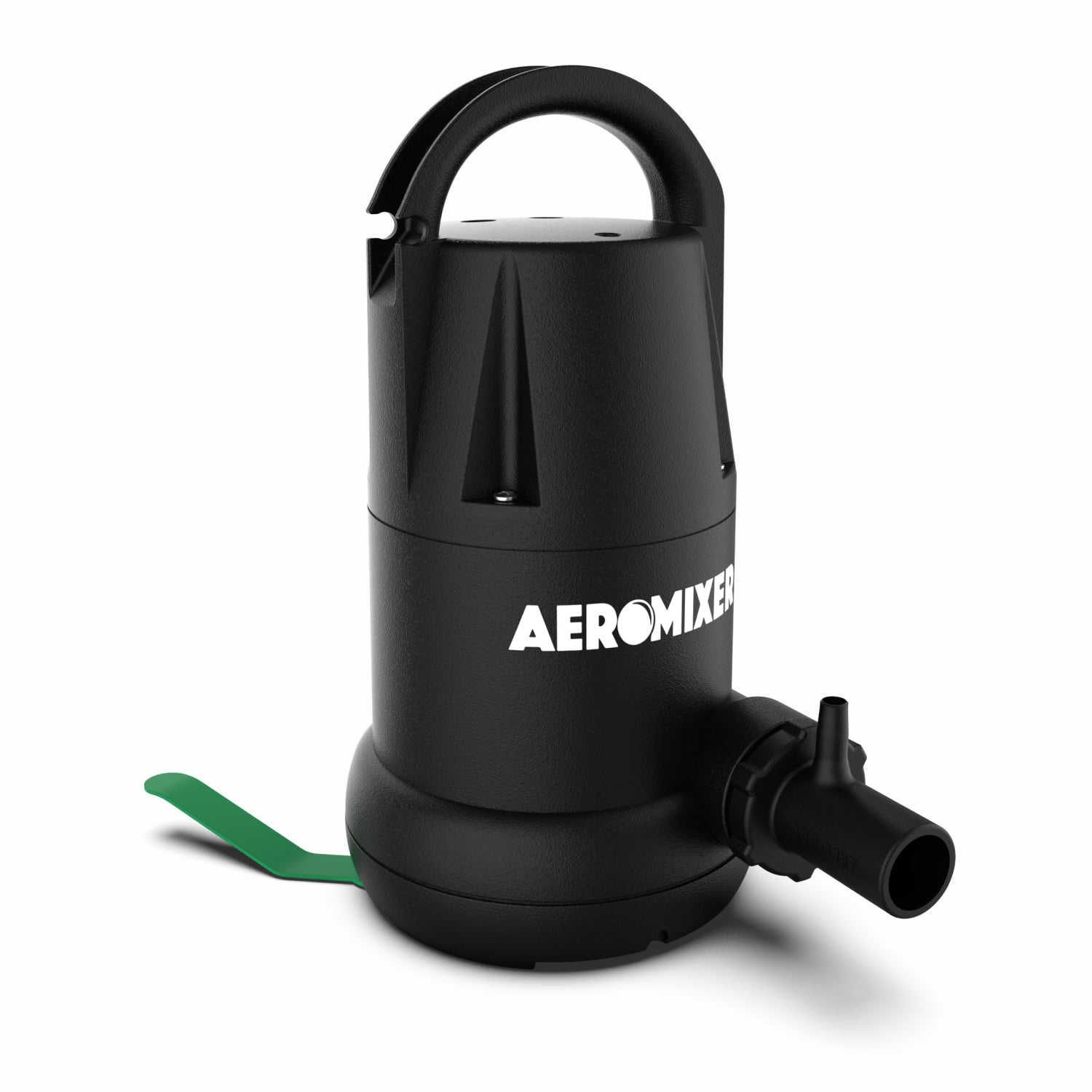
If your next step is upgrading the way your feed tank moves, the most relevant product hub is the Aeromixer hub. Aeromixer is built to mix + aerate feeding solutions with one pump, helping keep nutrients suspended while supporting a cleaner, more consistent tank routine.
Explore the Mixers HubQuick FAQ
What is nutrient mixing?
Nutrient mixing is the process of distributing fertilizers, amendments, and additives evenly throughout the tank so plants receive a more consistent solution.
What is aeration in a feed tank?
Aeration adds air contact to the water so oxygen can dissolve into the solution. It also helps reduce stagnant conditions in tanks and reservoirs.
Is mixing the same as aeration?
No. Mixing keeps nutrients suspended and distributed. Aeration supports oxygen levels and reduces stale water conditions. A good tank routine often needs both.
Why do nutrients settle at the bottom of my tank?
Nutrients can settle because the tank lacks bottom movement, the inputs are heavy, ingredients were added too quickly, products are incompatible, or old residue is already in the tank.
Can aeration cause pH to rise?
Aeration can influence pH because it changes gas exchange in the solution and interacts with the water source, alkalinity, temperature, and nutrients. Test consistently and look for patterns before adjusting.
Do I need air stones if I already have water movement?
It depends on the setup. Water movement can help reduce stagnation, but some systems still need dedicated aeration. Focus on the result: dissolved oxygen, consistent mixing, fewer dead zones, and a clean routine.
The Takeaway
Nutrient mixing and aeration are not bonus steps. They are part of making a feed tank behave.
Mixing keeps nutrients suspended. Aeration supports oxygen and helps reduce stagnant conditions. Together, they help prevent sediment, smells, pH surprises, uneven feeding, and wasted time.
Start with the basics: know your water, add nutrients in the right order, keep the tank moving, test after mixing, feed before the solution gets stale, and clean between batches.
Keep learning with the full Plant Feeding and Watering Guides, or build a stronger feed-tank routine with Aeromixer.