


Nutrients settling at the bottom of a feed tank is one of those problems that looks small until it starts causing uneven feeding, clogged pumps, wasted product, and mystery sludge. The fix starts with knowing why the sediment is there in the first place.
Key Takeaways
- Nutrients settle when particles fall out of suspension and collect at the bottom of the tank.
- Common causes include weak mixing, poor tank movement, cold water, hard water, high alkalinity, product order, old residue, and heavy organic inputs.
- Sediment is not just messy. It can make feeding uneven and clog pumps, hoses, screens, and fittings.
- Some settling is physical, while some is chemical. If nutrients react and form new solids, that is precipitation.
- The best fix is a better routine: start with good water, mix in the right order, keep the tank moving, clean between batches, and avoid letting solution sit too long.
A little sediment at the bottom of a feed tank is easy to ignore.
Until the first plant gets one mix, the last plant gets another, and the pump starts pulling sludge like it is trying to drink a milkshake.
Nutrients settling in a reservoir can happen for a few different reasons. Sometimes the solution was not mixed well enough. Sometimes the product is heavy or organic. Sometimes the water chemistry is working against you. Sometimes the tank is simply dirty from the last batch.
This article focuses on the common causes and practical fixes. For the bigger picture on tank movement, oxygen, and feed consistency, start with the full Nutrient Mixing + Aeration Guide.
What Does It Mean When Nutrients Settle?
Nutrient settling means material has fallen out of the liquid and collected at the bottom of the tank.
That material might be undissolved fertilizer, organic particles, sediment from the water source, residue from previous batches, biological buildup, or minerals that have fallen out of solution.
The important part is this: if material is sitting at the bottom, it is probably not being delivered evenly.
Suspended
Material is distributed through the water and moves with the solution.
Settled
Material has dropped to the bottom and may not reach plants evenly.
Precipitated
Nutrients have reacted chemically and formed solids that may not dissolve again.
Settling and precipitation can look similar in the tank, but they are not always the same problem. Settling is often about movement and suspension. Precipitation is chemistry. If you suspect chemical reactions are creating solids, read the dedicated guide on nutrient precipitation and how to avoid it.
Why Settling Matters
Sediment is not just ugly. It changes how the tank feeds.
When nutrients collect at the bottom, the solution at the top of the tank may be weaker than expected. The solution near the bottom may be stronger, dirtier, or full of particles. If your pump intake sits low, it may pull a heavier mix later in the feed. If the intake sits higher, it may miss settled material entirely.
That can lead to:
- Uneven nutrient delivery
- Clogged pump intakes
- Restricted hoses and fittings
- Wasted fertilizer
- Unstable EC readings
- Dirty tanks between batches
- More cleaning than you planned
Simple rule: if it is sitting at the bottom, it is not feeding evenly.
Cause 1: Not Enough Mixing
The most common reason nutrients settle is simple: the tank does not have enough movement to keep material suspended.
A surface ripple can look active, but that does not mean the bottom of the tank is moving. Many tanks have dead zones where material collects, especially around corners, flat bottoms, low-flow areas, and spots away from the pump.
Weak mixing can cause:
- Powders to collect before dissolving
- Organic inputs to sink
- Heavier particles to gather in corners
- EC readings to change depending on where you sample
- Feeding to become less consistent over time
How to fix it
Improve movement through the whole tank, not just the surface. Watch the bottom. If sediment stays still while the top moves, the tank needs better mixing.
You can improve mixing by:
- Using a stronger or better-placed mixing pump
- Creating movement across the bottom of the tank
- Avoiding dead zones in corners
- Mixing longer before testing or feeding
- Adding inputs slowly instead of dumping them in at once
For the difference between true mixing, simple circulation, and surface agitation, read Mixing vs. Circulation vs. Agitation.
Cause 2: Ingredients Were Added Too Fast
Even a good pump can struggle if nutrients are dumped into the tank faster than the water can carry them.
Dry nutrients, powders, thick liquids, and dense organic inputs need time to disperse. If they hit the tank in one heavy clump, some material may sink before it ever gets a chance to dissolve or spread.
How to fix it
Add products slowly into moving water. Give each input enough time to spread before adding the next one.
A better process looks like this:
- Fill the tank with enough water for proper dilution.
- Start mixing before adding nutrients.
- Add one product at a time.
- Let each product disperse before adding the next.
- Test after the solution has mixed, not while it is still changing.
This is especially important with concentrated nutrients. Never mix concentrates together before diluting unless the product instructions specifically tell you to.
Cause 3: The Water Is Too Cold
Temperature affects how easily some materials dissolve and how the tank behaves.
Cold water can slow dissolving and make heavier inputs more stubborn. If you are mixing in a cold garage, winter greenhouse, outdoor reservoir, or unheated water source, powders and thicker products may take longer to blend.
How to fix it
Give cold water more mixing time. Add inputs more slowly. Avoid assuming the tank is ready just because the surface looks active.
You may also need to:
- Let water come closer to the target temperature before mixing
- Mix longer in cold conditions
- Pre-dissolve certain dry inputs if the label allows it
- Avoid storing nutrient products where they get too cold or too hot
Keep this practical. You do not need to overthink every degree, but if the tank is cold and the nutrients keep settling, temperature belongs on the checklist.
Cause 4: Hard Water or High Alkalinity
Water chemistry can make nutrient mixing harder.
Hard water contains higher levels of minerals like calcium and magnesium. Alkalinity affects how resistant water is to pH change. Both can influence how nutrients behave in a reservoir.
If your water source is mineral-heavy, you may notice more residue, cloudiness, pH drift, or particles forming after nutrients are added.
How to fix it
Start by knowing your water. Do not guess.
- Check your water report if you use municipal water.
- Test well water if you are on a private system.
- Track pH and EC before and after mixing.
- Watch for repeat patterns with the same water source.
- Consider filtration or RO water if water chemistry keeps causing problems.
If the issue looks like nutrients reacting and forming solids rather than simply settling, move over to the dedicated precipitation guide. That article should handle the chemistry rabbit hole so this one can stay focused on tank behavior.
Cause 5: pH Is Out of Range
pH affects nutrient availability and solution behavior. If pH swings too high or too low, some nutrients may become less stable or less available.
This does not mean every bit of sediment is a pH problem. But if settling shows up with cloudiness, pH drift, or recurring residue after adjustment, pH should be checked.
How to fix it
Test pH after the solution has had time to mix. Testing too early can lead to over-adjusting.
A better pattern:
- Mix nutrients fully.
- Let the solution circulate long enough to become consistent.
- Test pH and EC.
- Adjust slowly.
- Retest after the adjustment has mixed through the tank.
For more on this, read pH Basics for Nutrient Solutions.
Cause 6: The Tank Is Dirty
Sometimes the “new” sediment is not new at all. It is old residue coming loose from the tank, pump, hose, fittings, or walls.
Old nutrient film, biofilm, algae, organic sludge, and dried residue can all break loose when fresh water starts moving. That can make it look like the current batch is settling when the system is actually shedding buildup from the last few batches.
How to fix it
Clean between batches before buildup becomes part of the routine.
- Drain old solution fully.
- Remove sediment from the bottom.
- Scrub the waterline and corners.
- Flush hoses after nutrient use.
- Check pump intakes, screens, valves, and fittings.
If sediment comes with slime, smells, or weak flow, read Cleaning 101: Keeping Tanks, Hoses, and Pumps from Getting Funky.
Cause 7: Organic Inputs Are Heavier
Organic nutrients and biological inputs can behave differently than clean mineral nutrient solutions.
Some organic products contain suspended particles or thicker materials that may naturally settle if the tank sits too long. That does not always mean the product is bad. It may mean the tank needs more movement, shorter holding time, or a different mixing process.
How to fix it
Follow the product label and avoid storing mixed solution longer than recommended.
Organic-heavy routines often benefit from:
- More active mixing
- More frequent tank cleaning
- Shorter time between mixing and feeding
- Regular hose flushing
- Careful pump and solids-handling decisions
If you are moving organic inputs, also make sure your pump can handle the type of material you are asking it to move.
Cause 8: The Tank Sits Too Long
Mixed nutrient solution changes over time.
Water temperature shifts. Oxygen levels change. pH can drift. Microbial activity can increase. Particles can settle. Sediment that stayed suspended during the first hour may collect overnight if the tank sits still.
How to fix it
Mix what you need and feed before the solution gets stale.
If you need to hold solution for a period of time, keep the tank moving when the routine calls for it and check the solution before feeding.
Watch for:
- Smell changes
- Visible sediment
- pH drift
- EC changes
- Slime on tank walls
- Reduced pump flow
If those signs keep showing up, the hold time is probably too long for the current setup.
How to Tell What Kind of Sediment You Have
You do not need a lab coat to do a basic check. Look at the pattern.
| What You See | Likely Cause | First Fix to Try |
|---|---|---|
| Powder or grains right after mixing | Input did not dissolve or disperse fully. | Add slower, mix longer, and check water temperature. |
| Heavy layer after sitting overnight | Insufficient suspension or tank sat too long. | Increase movement and shorten hold time. |
| Slick sludge or smell | Biofilm, organic residue, or dirty tank surfaces. | Drain, scrub, rinse, and flush the system. |
| Cloudiness followed by fine solids | Possible nutrient chemistry issue or precipitation. | Check pH, water source, product order, and read the precipitation guide. |
| Particles only after the pump starts | Old residue breaking loose from hoses, fittings, or pump areas. | Flush hoses, clean fittings, and inspect pump intake. |
A Practical Fix List
If nutrients keep settling in your reservoir, work through the fixes in order. Do not change everything at once unless the tank is clearly dirty or the batch is unusable.
Step 1: Clean the tank
Start with a clean baseline. Drain old solution, remove sediment, scrub the waterline, rinse the tank, flush hoses, and check pump intakes.
Step 2: Start mixing before adding nutrients
Add nutrients into moving water, not a still tank. Give each input time to disperse before adding the next one.
Step 3: Follow the nutrient order
Use the manufacturer’s mixing order. Do not mix concentrates together before dilution unless the label specifically allows it.
Step 4: Watch the bottom of the tank
Surface movement can fool you. Look for movement where sediment usually collects.
Step 5: Check water temperature
Cold water can slow dissolving. If settling gets worse in cold conditions, mix longer and add inputs more slowly.
Step 6: Test pH and EC after mixing
Do not chase readings before the tank is consistent. Mix, wait, test, adjust slowly, and retest.
Step 7: Shorten hold time
If the solution settles after sitting, mix closer to feeding time or keep the tank moving as needed.
When Settling Is Actually Precipitation
Precipitation happens when dissolved nutrients react and form solid material. That is different from simple particles sinking because the tank is not moving enough.
Precipitation can be caused by nutrient incompatibility, high pH, hard water, high alkalinity, poor mixing order, or mixing concentrated products together before dilution.
The difference matters because a settled particle may be suspended again with better mixing. A precipitated solid may not go back into solution in a useful way.
Quick check: if better mixing does not help and the solids keep forming after nutrients are added, you may be dealing with precipitation, not ordinary settling.
For that deeper chemistry issue, use the dedicated guide: What Is Nutrient Precipitation and How Do You Avoid It?
How This Fits Into a Better Mixing Routine
The best fix for sediment is not one magic step. It is a better tank routine.
A clean, consistent routine looks like this:
- Start with clean water and a clean tank.
- Start the mixer before nutrients go in.
- Add products one at a time.
- Follow the label’s mixing order.
- Give the solution enough mixing time.
- Check the bottom for dead zones.
- Test pH and EC after mixing.
- Feed before the tank sits too long.
- Flush hoses and clean the tank between batches.
That is how you reduce sediment without turning every batch into a guessing game.
Want fewer dead zones in your feed tank?
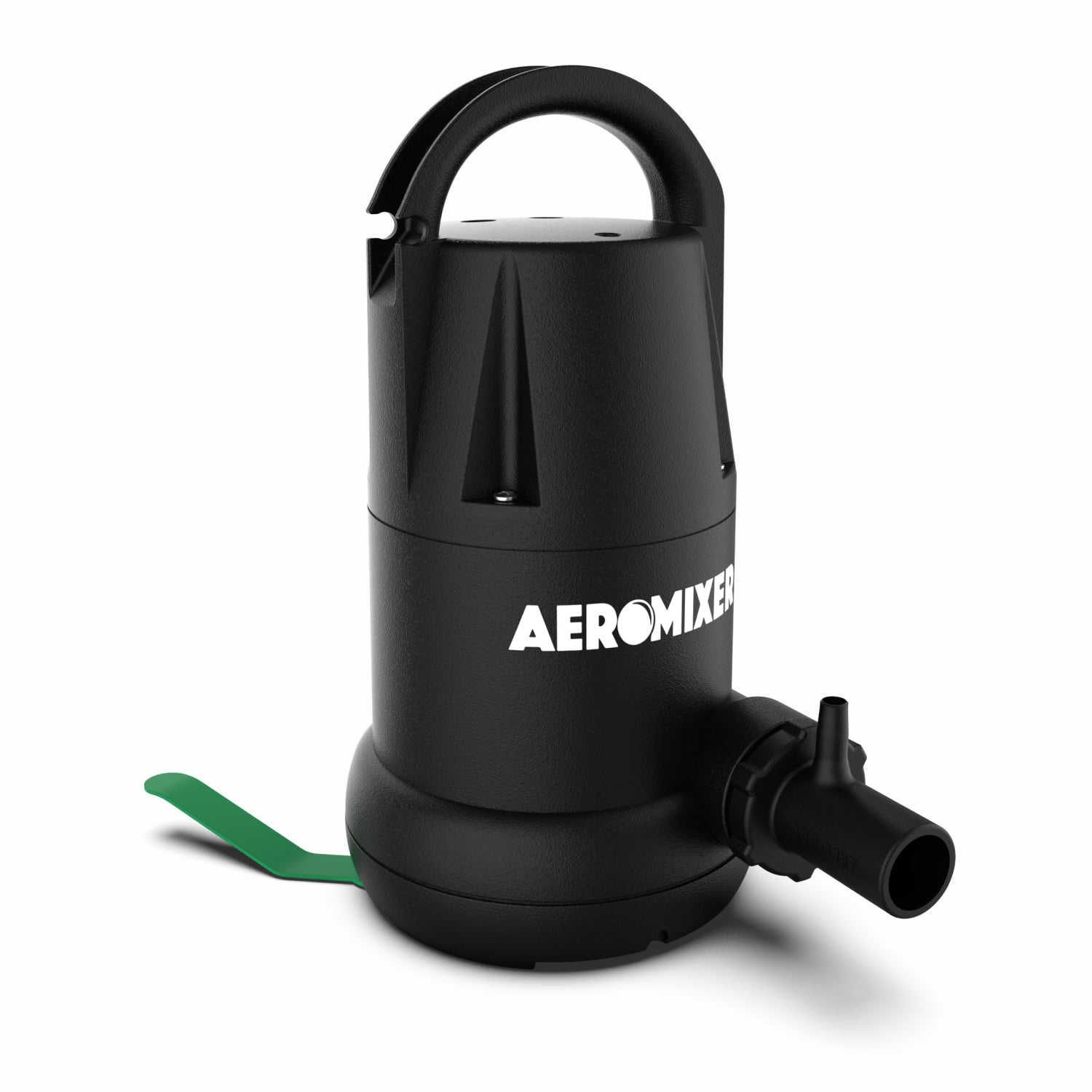
If your next step is better tank movement, the most relevant product hub is the Aeromixer hub. Aeromixer is built to mix + aerate feeding solutions with one pump, helping keep nutrients suspended and reducing the bottom-of-tank sludge routine.
Explore the Mixers HubCommon Mistakes to Avoid
Only mixing at the surface
Surface movement does not guarantee bottom movement. Sediment collects where the tank is not moving.
Adding nutrients before the water is moving
Nutrients disperse better when they enter moving water. A still tank gives heavy inputs more time to sink.
Testing too early
If the solution is not fully mixed, pH and EC readings may not represent the whole tank.
Ignoring the water source
Hard water, high alkalinity, and mineral-heavy water can affect how nutrients behave.
Leaving old residue in the tank
Old sludge can break loose into the next batch and make a fresh mix dirty from the start.
Quick FAQ
Why are nutrients settling at the bottom of my reservoir?
Nutrients can settle because the tank is not mixing well enough, ingredients were added too quickly, the water is cold, organic inputs are heavy, the tank is dirty, or the water chemistry is causing solids to form.
Is sediment in a feed tank bad?
Sediment can make feeding uneven, waste nutrients, clog pumps, restrict hoses, and create more cleaning work. A small amount may be manageable, but recurring sediment should be fixed.
Can I just stir settled nutrients back in?
Sometimes. If the material is simply settled, better mixing may suspend it again. If the material is chemically precipitated, it may not dissolve back into a useful form.
Does cold water make nutrients settle?
Cold water can slow dissolving and make some inputs harder to mix. If settling gets worse in cold conditions, add nutrients more slowly and mix longer.
Can hard water cause sediment?
Yes, hard water and high alkalinity can contribute to residue, cloudiness, pH drift, or nutrient reactions in some setups. Test your water if sediment keeps coming back.
How do I stop nutrients from settling?
Clean the tank, start mixing before adding nutrients, follow the proper mixing order, add inputs slowly, keep the bottom of the tank moving, test after mixing, and avoid letting solution sit too long.
The Takeaway
Nutrients settling in a reservoir usually means the tank routine needs attention.
It might be weak mixing. It might be cold water. It might be the nutrient order. It might be hard water, pH, organic inputs, or old residue. The fix starts by separating ordinary settling from true precipitation, then cleaning up the process one step at a time.
Keep the tank clean. Add nutrients into moving water. Mix long enough. Watch the bottom. Test after the solution is consistent. Feed before the tank gets stale.
Keep learning with the full Nutrient Mixing + Aeration Guide, or build a better tank routine with Aeromixer.